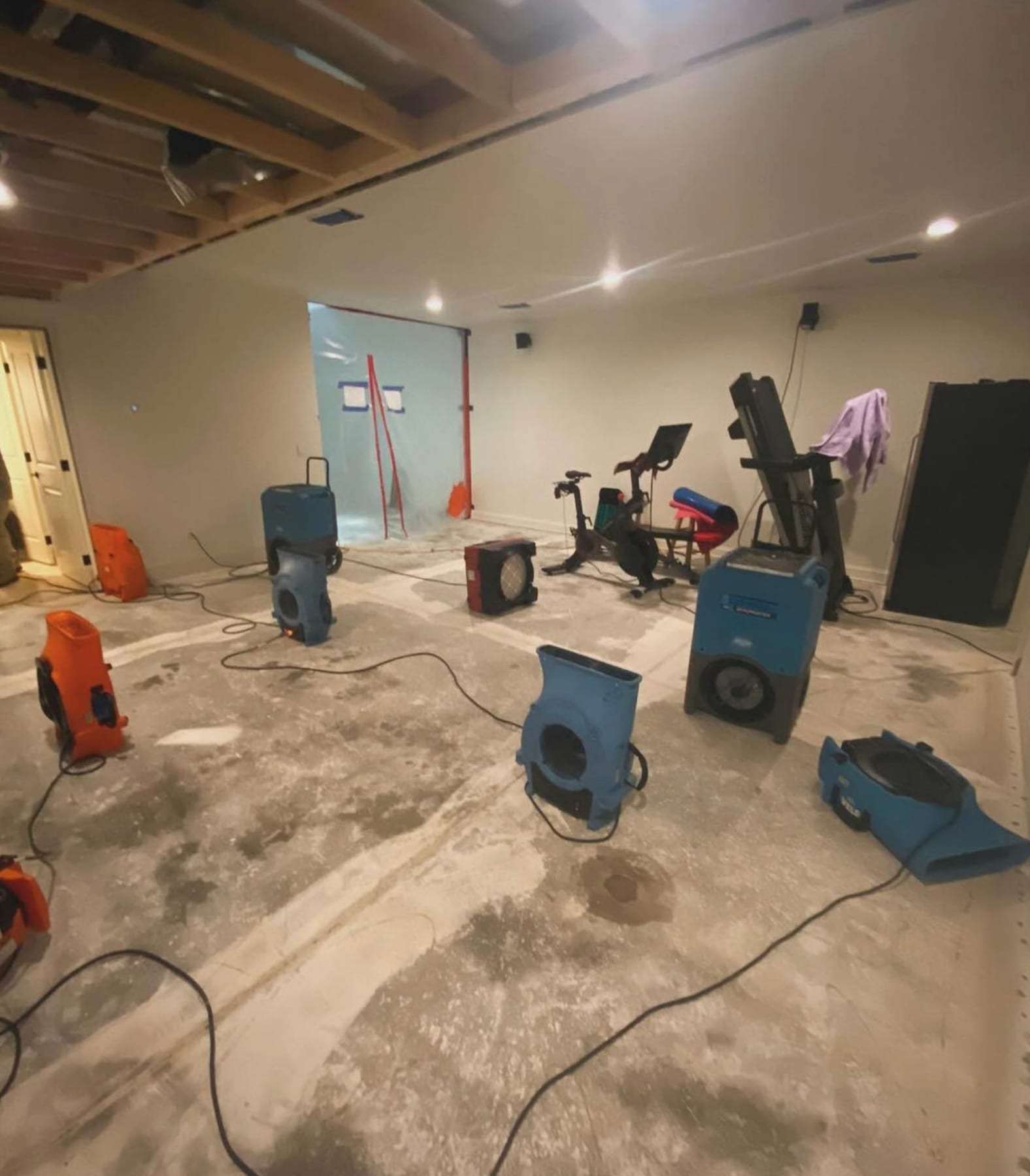
Basement drying with air movers and dehumidifiers. A representative photo of the task, not a record of work at any particular property.
The situation
Illustrative example. Not a real job or customer.
A hypothetical 1950s ranch in Englewood has a basement family room carpeted decades ago. The water heater in the adjoining utility room fails overnight, and by morning clean water covers the family room carpet.
- The owner shuts off the water to the heater and the gas valve to the burner, then calls a plumber and the insurer.
- A cleanup provider extracts the water and pulls back the carpet to remove the pad. Underneath, the slab is covered in nine-inch square tiles set in black adhesive.
- Several tiles have loosened in the water. The provider stops work on the flooring and recommends sampling the tile and adhesive before any are removed.
- Meanwhile, the carpet is floated with air movers, dehumidifiers run, and the lower drywall in the utility room, which has no old materials of concern, is cut and dried.
- Lab results show the tile contains asbestos. A state-certified abatement contractor removes the tile and adhesive under containment, and drying of the slab finishes afterward.
The project takes longer than a simple water heater leak, but no one scrapes up the tile by hand and spreads dust through the house. The owner chooses a vinyl plank floor rated for basements for the rebuild.
Why the pause was the right call
Nine-inch tiles and black adhesive are classic signs of flooring from the middle of the last century, a period when some resilient flooring products contained asbestos. Intact tile under carpet poses little risk. Water changes that, because it loosens tiles and tempts people to pry them up, snap them or scrape the adhesive, which is exactly what can release fibers.
Stopping only the flooring work, rather than the whole job, kept the rest of the basement on schedule. The air was being dried, the carpet was being saved and the utility room was moving forward while the lab did its part. The few extra days spent waiting were far less disruptive than a contaminated basement would have been.
What kept moving and what paused
| Task | Status while waiting for results | Why |
|---|---|---|
| Water extraction | Done immediately | Standing water does not disturb the tile |
| Pad removal | Done carefully, without scraping | Pad lifts off without breaking tile |
| Drying the room air and carpet | Continued | Equipment does not disturb intact tile |
| Removing loose or broken tile | Paused | Suspect material until tested |
| Utility room drywall | Continued | Different material, not suspect |
| Final slab drying | After abatement | Tile and adhesive had to come off first |
General information for Englewood, not a quote or professional advice. In an emergency, call 911.